


Introduction: Why Self Improvement Feels Confusing and Overwhelming
Most of the individuals desire to make their lives better, but they become discouraged after reading books, watching videos, or adopting new habits. You might understand you need to do something, that you need to be more disciplined, think positively, remain consistent, but, nevertheless, you cannot do so. In the long term, this can be frustrating and discouraging as there is a great distance between desire and action.
The problem is not the lack of desire and intelligence. It is an ignorance about the proper functioning of change in the human mind.
Scientific explanation of self improvement can be used to explain why certain changes become permanent and others die. Once you come to grasp how behavior, habit, and mindset work, self-improvement will not be as much about compelling yourself but rather entering into how your brain learns and adapts.
This article explains the science of self improvement in an easy, simple, and practical manner in a manner that you can apply without getting overwhelmed.
What Self Improvement Really Is (From a Scientific View)
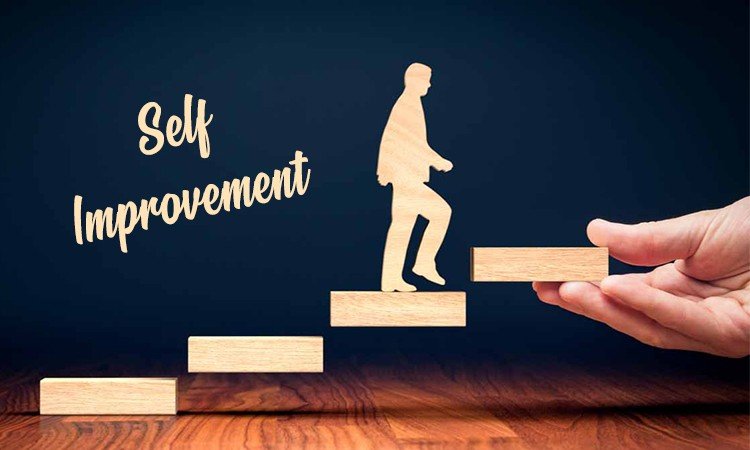
Self improvement is misconceived to mean hustle, being exhausted of motivation. Scientifically, it is the transformation of thought patterns, behavioral and habitual change with time.
The brain is not static. It changes according to the experience. It is the capacity to transform that allows us to be self improved.
Betterment is not achieved in isolated instances of enlightenment. It occurs via minute and recurring behaviors which redefine the manner in which the brain forecasts behavior.
Knowledge of the latter eliminates stress and gives way to patience.
Why Willpower Alone Doesn’t Work
The sense of the power of will has been the perceived key to the success of change, yet studies provide year after year the opposite. Power of the Will varies according to the stress, energy and the environment.
The process of development will not be steady when the population depends on their personal strength. On good days, one feels productive and when it goes bad, one feels like they have failed.
Science of self improvement proves that there is more value in systems, habits, and environment rather than raw effort. Change that is not necessarily pegged on the current motivation is sustainable.
Structure helps in self improvement as long as it is given support.
The Role of Habits in Self Improvement
Habits: these are automatic behaviors that are developed due to repetition. When it is established it does not need as much conscious effort.
Scientifically speaking, habits are there to conserve mental energy. The brain uses patterns that it knows best as they diminish decision-making.
This is why it is hard to get rid of bad habits and it is hard in the beginning to get used to good habits. The new behaviors must be consciously practised before becoming familiar.
Self development is mostly concerned with substituting existing habits with new ones that can facilitate development.
How Thoughts Shape Behavior
The way of thinking shapes the manner of feeling, and the feeling shapes the behavior. This chaining occurs very fast and unconsciously.
When an individual thinks a lot about what he believes in, that is, I am not disciplined, the brain seeks to support the thought in a very specific way. Identity and behaviour make each other stronger throughout the time.
That is why the issue of mindset is relevant in self improvement. Behavioral change without changing patterns of thinking tends to bring about relapses.
The brain believes what it hears continuously and what it experiences.
Common Patterns That Block Self Improvement

The all-or-nothing way of thinking is one trend. The individuals think that change should be radical to be important. Where perfection cannot be accomplished, work is halted.
The other is outcome obsession. Concentrating on outcomes generates a strain without establishing the disciplines to maintain.
Another obstacle is the element of comparison. Comparisons to others mislead one regarding progress and cause unnatural frustration.
Lastly is impatience resulting in people quitting before the change gets a chance to multiply.
These trends are mental and not weaknesses in character.
The Science Behind Small Changes
Brain has adapted to take smaller and gradual changes as compared to big and abrupt changes. Minor things seem secure and easy to handle.
Any little achievement emits the feeling that one is progressing, which ledges behavior. In the long term, these activities create confidence and identity.
That is why slow development may result in more efficient outcomes in the long run than hard work.
Science of self improvement is more of sticking consistently rather than intensity.
Practical Mindset Rewiring Techniques
Shift From Outcomes to Process
You should not work on the results, but rather what you do daily. Learning in the brain is not goal oriented but due to repetitions.
With the process coming first, results come as by-products.
Use Identity-Based Thinking
Ask yourself who you want to be, not what you want to be. Actions coordinated with identity are more consistent.
Minor actions enforce confidence that an individual holds onto and this promotes future action.
Reduce Friction for Good Habits
Reduce the difficulty of negative actions and increase the ease of starting positive ones. Behavior is determined more by the environment than motivation.
The minor environmental changes can bring forth tremendous outcomes.
Practice Awareness Without Judgment
Behave without first believing that they are failure. Consciousness undermines habitulatory patterns.
When learning takes over the place of self criticism the self improvement is faster.
Why Self Improvement Feels Hard at First
Foreseeing stages of change is uncomfortable as the brain does not like new ways. The new practices are not comfortable until they become comfortable.
This is no failure. It’s adjustment.
At this stage a lot of individuals drop out because they believe that something is amiss. As a matter of fact, this is where the change is occurring behind the scenes.
One of the psychological skills is patience.
The Role of Consistency Over Motivation
Motivation is on the emotional and unpredictable level. consistency is acting in a certain way, being stable.
Science of self improvement demonstrates that attending regularly is important than feeling inspired.
Once the actions have become habitual, they are less demanding. This decreases burnout and enhances follow-through.
Even-handedness creates the faith between will and action.
Common Mistakes to Avoid
Among the errors that can be made is attempting to change too many things simultaneously. This is too much to live with and eliminates uniformity.
The other error made is the use of motivation as a long-term strategy. Initiation of change is achieved through motivation which is unable to maintain.
A lot of individuals fail to pay attention to environment as well thus resulting in habits that are not as difficult as they need to be.
And finally, anticipation of immediate outcomes brings discouragement and giving up.
How Long Does Self Improvement Take?

The universal timeline does not exist. There are those changes that are evident in weeks and that which are profound in months.
Repetitions make the brain evolve. The development is usually intangible, then some reward comes in.
It all depends on being regular enough that the new tendencies become well-known.
Enhancement is not immediate.
Why Self Improvement Compounds Over Time
The habits that help each other are positive. As a result of an enhanced concentration, better decisions are a benefit. Good judgments aid healthy behaviors.
This compounding effect is the reason why things pick up at the end, despite being slow initially.
Science of self improvement demonstrates that direction is more important than speed.
When it is time, small changes have momentum.
Applying the Science of Self Improvement to Daily Life
It does not take a perfection or strict exercises to improve oneself. It demands consciousness, continuity and patience.
Minor steps like taking thought daily, working on concentration, creating little habits, change the mind in the long run.
It is sustainable when improvements are incorporated in day to day life.
The growth is an experience and not a thing to be pursued.
Conclusion: Work With Your Brain, Not Against It
The simple science behind self improvement conveys only one fact, and it becomes permanent change when you do not act against human psychology but with it.
You do not require additional inspiration. You require superior systems, mini habits and divine anticipations.
Once you realize the way habits are developed, how thoughts control behavior and how not breaking them remakes the brain, self improvement is pragmatic rather than daunting.
Start small. Stay consistent. Let the science do the work.
Frequently Asked Questions (FAQ)
What is the science of self improvement?
It explains how habits, thoughts, and behavior change over time.
Why is self improvement so hard?
Because the brain resists sudden change and prefers familiar patterns.
Does willpower really matter?
It helps short-term, but systems matter more long-term.
How long does self improvement take?
It varies, but consistency matters more than speed.
Can small changes really work?
Yes, small changes compound over time.
Why do habits matter for self improvement?
Habits automate behavior and reduce effort.
Is mindset important for change?
Yes, mindset shapes behavior and consistency.
Can anyone improve themselves?
Yes, with patience and consistent practice.