


Introduction: Why Staying Motivated Feels Harder Than Ever
Being a student in 2026 is not easy. There is no lack of distractions. Alerts break your concentration, Facebook and Instagram are fighting to see who can distract you better, and the stress to achieve is on at all times. Most students are aware of what they ought to do but they are not able to create the motivation to do it.
When you have sat down to study and realized that you have spent an hour scrolling through as well as you, you are not alone. It is not some form of deficiency of intelligence or ambition. It is the culmination of a world that is meant to divide attention.
This is why students should be self-motivated in 2026 but in a different way. Old-fashioned ruin such as only work harder is not effective anymore. Distraction control techniques, training the mind to be strong, and motivation even when the focus is impossible to concentrate on are more practical solutions that the students need today.
This guide is going to assist you in building an attitude that facilitates learning, the inner critic, and developing habits that make motivation last in the distracted world every day.
The Reality of Distraction in Modern Student Life
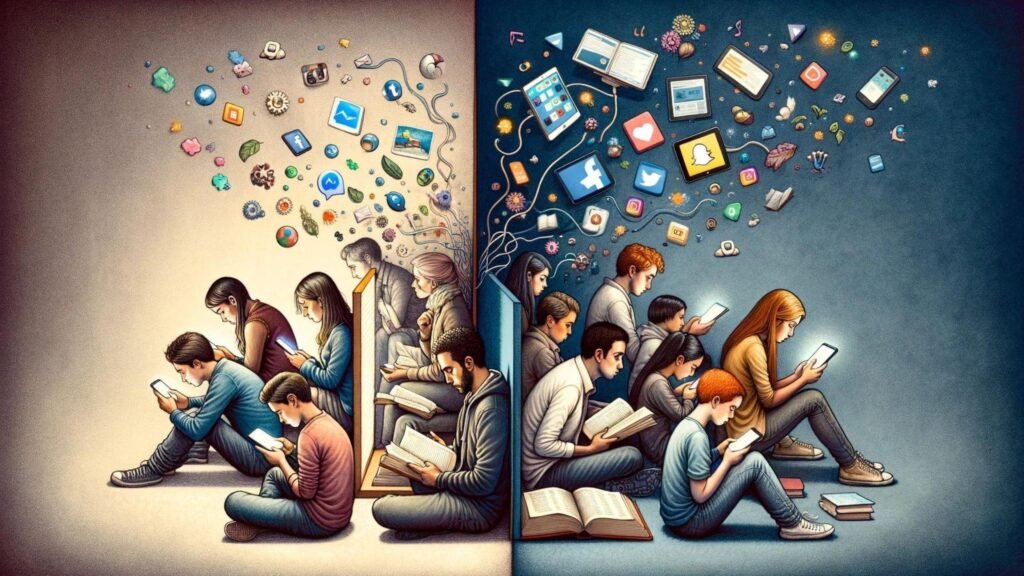
Distraction is no longer an infrequent occurrence. It is constant.
Phones, video streaming services, chat rooms, and constant content are competing with each other in a minute. This goes against your wishes, your brain is conditioned to be excited, even when you wish to be concentrated.
A motivation problem is established by this environment. When you have been accustomed to instant gratification, you feel uncomfortable when performing slow activities such as studying. In the long run, it causes procrastination, guilt and loss of confidence.
This is a reality that one should understand. It is not an issue of individual failure. It’s environmental overload. And when you realize that, then you can begin to create systems to safeguard your focus and motivation
Why Motivation Alone Is Not Enough for Students
Most students procrastinate till they are motivated to study. It can result in a lower level of consistent effort and last minute stress.
Inspiration is psychological and short-lived. It swings and changes according to mood, sleep and pressure. The dependence on it makes a poor foundation.
The real contributor to the long-term academic success is organization, practice, and attitude. Motivation assists you in getting started whereas systems assist you in maintaining.
Those who do well in 2026 are not the most motivated students. They are the most consistent.
Rewire Your Mind for Focus and Follow-Through
Whatever you practice your brain will adapt to. When you are practising distraction, your brain gets some practice at distraction. By practicing focus, then your brain develops the same capacity as well.
This has been commonly referred to as rewiring the mind.
Start by reducing friction. Select a certain location and time of study. The less you tend to focus on resistance, the less resistance you will have when your brain links that environment with focus.
It is the consistency that is important and not the time. Your concentration can be re-trained within even 25 minutes of concentrated study a day. It is these little repetitions that inform your brain that you are supposed to concentrate not just to get away with it.
Managing the Inner Critic That Kills Motivation

Facing a problem is not the reason why many students suffer but it is their inner critic who consumes their energy.
The mental ideas such as I am not an intelligent person or I am always the last one to finish silently kill motivation. After some time, it is emotionally draining to study.
This is where the need to talk positively comes in.
Rather than self-blaming and blaming yourself as struggling, use neutral and supportive words:
I am training how to cope with this.
This is not easy, but being hard does not mean being a failure.
This strategy does not reduce standards. It eliminates redundant emotional baggage. When you talk to yourself in a positive manner, motivation is more readily available to you.
Build a Growth-Oriented Student Mindset
One of the strongest methods to reinforce the sense of motivation is to develop a growth mindset.
Growth minded students are of the view that skills can be increase through practice. Students with a fixed mindset believe their abilities cannot change. Psychologist Carol Dweck explains that when students believe they can learn, even in difficult situations, they continue working and recover more quickly.
Putting this into practice it implies:
Perceiving low grades not as a failure.
Seeing hard work as a sign of strength, rather than a sign of weakness.
Viewing mistakes as a source of mental development.
This mentality removes fear which is one of the greatest motivation killers.
Create a Focus System That Fits Student Life
Sight does not involve excellence. It requires intention.
Successful students will employ simple systems to control attention in the year 2026. They organize their study sessions ahead of time and get rid of apparent distractions during that period.
This might mean:
- learning with your phone in a different room.
- Time blocks as opposed to open-ended sessions.
- Establishing specific objectives of every learning session.
Your brain will not want to oppose when you have expectations. Dwelling turns into an ordinary war, rather than a struggle.
Use Small Wins to Rebuild Motivation
Setbacks go hand in hand with the loss of motivation. It might be difficult to get going again as a result of missed deadlines, poor results or burnout.
Neverwhere to go but little by little.
The accomplishment of one task, overviewing one concept, or completing one assignment builds momentum. These victories provide positive feedback which helps to work harder.
Measure your improvements in uncomplicated stages. The crossed out tasks give tangible evidence of work. This creates trust and reliability with time.
Balance Discipline and Flexibility
A lot of students have the perception that discipline is needed to be motivated. There are those who overly depend on flexibility. The two extremes are problematic.
Punishment offers order. Burnout is avoided through flexibility.
The key is balance. Establish schedules, but make a change when life alters. Efforts are not lost by skipping a study session. It is just a matter of coming back, guilt free.
The moderate stance facilitates self-improvement in the long run and avoids the all or nothing attitude that results in quitting.
Protect Your Mental Energy

Mental energy is a factor of motivation. It is hard to concentrate when you are overloaded in your mind.
Take note of what you are drained by. The negative news and constant comparison, as well as infinite scrolling, silently drain the focus.
Secrecy of mental energy does not imply escapism. It is a matter of making decisions based on the selection of inputs.
Substitute passive consumption with planned breaks. Even during short, calm walks, reading, or meditation, attention is put back and motivation is regained.
Align Study Goals With Personal Meaning
The desire to work increases when work is meaningful.
Learning should be tied to personal objectives as opposed to studying just to have grades. You need to ask yourself how this topic can help you in your future or what you would like to know.
Learning that is related to identity and values makes effort valuable even when there is a challenging task at hand.
Obligation is transformed to intention by meaning.
Use Reflection to Strengthen Self-Motivation
Reflection enables the students to learn through experience rather than working through the same battles.
At the end of each week, ask:
What worked?
What didn’t?
What will I adjust next week?
This is developed through self-knowledge, which is an essential ability in mental development. It is a way of becoming a learner rather than a panhandler.
Contemplation changes the hard work into wisdom.
Social Influence and Motivation in 2026
People are part of your environment, and not only devices.
Being around encouraging people, even online, may reinforce concentration. Good culture in schools promotes discipline and responsibility.
In case the place you are now is a de-motivator, find other options. It can be one peer or an educational community of online study groups.
In as much as effort is shared, motivation normally increases.
Digital Tools: Helpful or Harmful?

Technology may help or destroy student motivation.
Use tools intentionally. Focus can be assisted by productivity applications, timers and planners. Unlimited amusements and alerts sabotage it.
The tool is not the difference, but it is the way in which you use it.
Motivation is better when technology is used to its purpose. Motivation is lost when it is in charge of your focus.
Long-Term Mental Growth Beyond Academics
Students have self-motivation that is not limited to grades. It is not just about acquiring skills that can be useful even after school.
Concentration, self-discipline, emotional control, and self-positions help in a lifetime learning and self-development.
Whom you become today determines your attitude towards issues in the future work, relations and personal targets.
This view renders the present day effort worthwhile.
Conclusion: Motivation Is a Skill You Can Build
It will be difficult to remain as a student in 2026 but not impossible.
Perfect focus is not necessary to remain consistently inspired. Strong systems, positive self-talk, and a mindset that values progress over perfection are what truly matter.
Lasting motivation develops through managing distractions, building structured daily habits, and maintaining mental energy.
Focus is not about willpower. It’s about design.
And motivation is not an object of waiting. It’s something you practice.
FAQs: Self-Motivation for Students in 2026
1. Why is it harder to focus as a student today?
Because constant digital distractions fragment attention.
2. How can students stay motivated without feeling burned out?
By balancing discipline with flexibility and rest.
3. Does mindset really affect student motivation?
Yes, a growth mindset supports persistence and learning.
4. How can I silence my inner critic while studying?
Use balanced, positive self-talk instead of harsh self-judgment.
5. Can small study sessions really help motivation?
Yes, small wins build momentum and confidence.
6. Is motivation more important than discipline for students?
Discipline sustains action when motivation fades.
7. How can I rewire my mind to focus better?
Practice consistent, distraction-free study routines.
8. What’s the best way to restart motivation after procrastinating?
Choose one small task and complete it immediately.