


Introduction: Why Self Improvement Feels Harder Than It Should
You really might desire to change your life- to be more serious, calm, self-assured, or faithful, but you could be simply caught in the rut. You begin with a good start, lose the interest and then even accuse yourself of being uninspired or weak of heart.
It is not an issue to be ashamed of, and that frustration is widespread.
The problem lies in the fact that the greatest majority of individuals attempt to make changes in their lives without training the mind that make every decision, habit, and responses. Self-improvement does not start with coercion of better behavior. It starts with the knowledge on how to train your mind to self improve in a way that is in tandem with the working of the brain.
When the proper training is carried out in the mind, the better habits will become natural rather than tiring. It grows in a sustainable rather than a stressful way.
What It Really Means to Train Your Mind
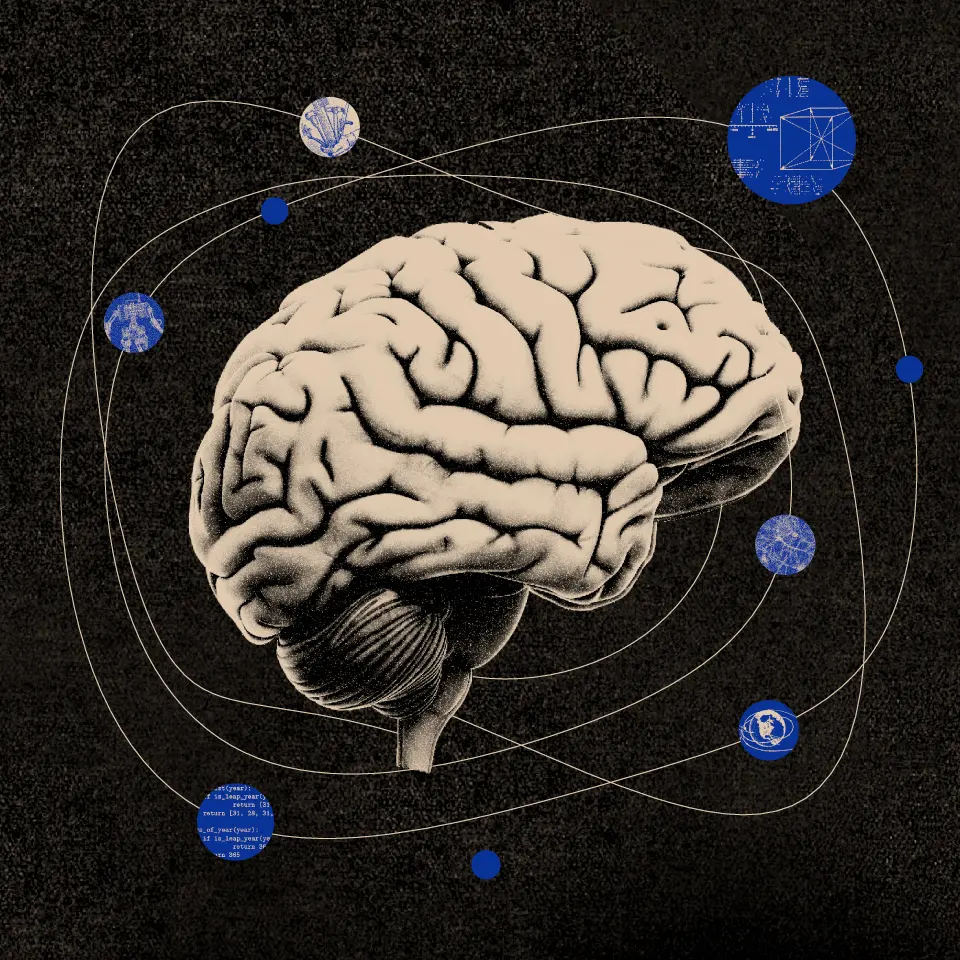
It is not about thinking, you have to train it and be always positive. It involves creating awareness in your mind that can make you act in a way you want and not in a manner that is urgent.
Psychologically, the mind masters repetitively, by reinforcing and through disclosures. The thoughts that you keep repeating, the habit you are keeping and the environments you are engaging with influence the way your brain functions.
Self-improvement works where the behavior change is complemented by mental training as opposed to behavior change against untrained thinking.
Why Willpower and Motivation Aren’t Enough
Willpower is limited. Motivation is inconsistent. They both rely on emotional and mental energy that changes on a daily basis.
Motivation alone makes progress weak when it comes to self improvement. Effort is easily derailed by stress, fatigue or boredom.
Mind exercise towards improvement changes the emphasis on the emotional efforts to the mental mechanisms. Do I feel like doing this will never be asked. the mind comes to behave on the basis of identity, habits and intention.
This is the reason as to why disciplined individuals do not have to depend on motivation. They are dependent on conditioned thinking.
Common Mental Patterns That Hold People Back
A negative self-talk is one such trend. There is a silent way thoughts such as I am bad at consistency or I always quit mold behavior. The reason is that the mind seeks to find evidences that will prove these beliefs to be true.
The other tendency is the emotional avoidance. Any kind of discomfort, boredom or uncertainty causes distraction or procrastination, rather than focus.
Most individuals also have the problem of all-or-nothing thinking. When improvement is not ideal, they give up completely.
These are the patterns which are acquired responses. They only continue until the mind is conditioned to react otherwise.
How Thoughts Shape Behavior and Habits
Emotion and thoughts are the two elements that control action. This chain usually occurs automatically.
When the mind perceives that something is threatening it or failure as discomfort, then the behavior is defensive. Procrastinating, distracting or giving up is protective.
Mind training entails the way of interpreting situations. Once work is perceived as development and pain as an education, behavior changes automatically.
Self improvement is more of adjustment and not opposition.
The Role of Attention in Mental Training
The basis of the control of mind is attention. Things that always attract you influence your way of thinking.
The mind is trained by the modern distractions to remain reactive. There are notifications, multitasking and continuous stimulation, which undermine focus.
Attention should be considered as a skill in order to train your mind to be improved. When it comes to the practice of concentration, even in small portions, it acts as an improvement to focus.
Other mental competencies do not develop without control over attention.
Practical Ways to Train Your Mind for Self Improvement
Build Awareness Before Control
What you do not see you can do nothing about. Mental training begins by just viewing thoughts, reactions and habits without judgment.
Note the time of procrastinating, losing focus, or hiding. The conscious fact or knowledge undermines automatic behavior.
This leaves room to make a decision.
Practice Small Acts of Focus
The mind develops as one builds strength, just as muscles do. Brief stints of concentration condition acuity.
Take one task and spend some few minutes on it completely. In the long run, this develops mental strength and becomes less distractive.
Sustainability is of greater importance than time.
Use Identity-Based Thinking
Being result-oriented is not enough, but rather state what kind of a person you are going to be. A focused person. A disciplined person. A learner.
Thereafter, select practices that support such identity. Self-belief is recreated through small actions which are replicated on a daily basis.
Behavior is more powerful due to identity as compared to motivation.
Reframe Discomfort as Progress
It is not a natural feeling of being mentally trained. Focus feels hard. Consistency feels awkward.
This pain is an indicator that there is new neural connections that are taking shape. Seeing it as a step forward rather than defeats makes you interested.
Growth itself may be difficult to experience at first but may become natural.
How Environment Supports Mental Training
Environment has more influence on thinking as compared to the majority of individuals. Disorganized areas, frequent distractions, and the ability to be easily distracted compromise mental control.
Environmental modification makes it less tough to concentrate the mind. The less the decisions the more clarity there is.
It is easier to train mentally when the environment is favorable.
Why Emotional Regulation Matters for Self Improvement

Emotions pose strong emotions and minimize the quality of decision. When the feelings are dominating, the thoughts are reactive.
Mind training entails how to be aware of emotions without having them to control you. This would allow room to make better decisions.
Self-tailored patience, concentration and perseverance, which are vital in the long-term self development, are enhanced through emotional control.
Common Mistakes to Avoid
Making the attempt to make the mind over in a single night is one of the errors. Mental training is a slow process achieved via repetitions.
The other wrong is the waiting to get confident before taking an action. The confidence is the result of action and not its precondition.
There are also a lot of individuals who self judge in regards to failures. Self criticism does not change anything, it maintains the old patterns.
Finally, mental development is impaired by disregarding the aspect of rest and recovery. A fatigued mind finds it difficult to learn.
How Long Does It Take to Train Your Mind?
There is no exact timeline. There are changes which can be observed in few weeks and then profound changes come in a few months.
The brain does not transform in a flash but rather through regular patterns. An initial achievement can be so delicate or unseen.
It is a matter of consistency till new patterns of thinking become accustomed.
Patience is a positive practice in mental training.
Why Trained Thinking Makes Self Improvement Easier
The mind is trained and when this is done, life becomes easier. Decisions feel clearer. Focus improves naturally.
That is why forgetting self improvement is easy to some people. It is not their change of behavior–they are acting out of conditioning.
There is no mental struggle, instead, there is mental clarity.
Applying Mental Training to Daily Life
You do not have to have strenuous habits to condition your brain. The day-to-day life offers sufficient chances.
Moments of attention and incidence and deliberate act get cumulative. Both decisions empower mental preferences.
Resilience makes him or her improve herself as it is not something to keep pursuing.
Conclusion: Train the Mind That Shapes Everything Else
Training on how to train your mind to improve yourself alters the experience of growing. and rather than imposing discipline, you develop sanity. You make consistency rather than pursue motivation.
The mind gets accustomed to practicing things. There is a way of thinking purposefully, carefully, and mindfully, practice behavior comes in a natural way.
Self improvement is not of making something out of one. It is all about teaching the mind you currently possess to work to your advantage, rather than against you.
Start small. Stay consistent. Let the intellectual training do the lifting.
Frequently Asked Questions (FAQ)
What does it mean to train your mind?
It means developing mental skills like focus, awareness, and emotional control.
Can anyone train their mind for self improvement?
Yes, mental skills improve with consistent practice.
Why is motivation unreliable for self improvement?
Because motivation fluctuates, while habits and systems endure.
How long does mental training take?
It varies, but consistency matters more than speed.
Does focus really improve with practice?
Yes, attention strengthens through repeated use.
Is discomfort normal during mental training?
Yes, discomfort often signals learning and growth.
Do thoughts really affect behavior?
Yes, repeated thoughts shape emotions and actions.
What’s the first step to training the mind?
Awareness of current thinking patterns.



Good 😊