


Introduction: Why It Feels Harder Than Ever to Focus
In case you think that your attention span is decreasing, you are not dreaming of it. You sit down to focus, but within minutes you’re drifting off. You reach for your phone without thinking, bounce between tabs, lose your momentum, and end up mentally drained without having accomplished much.
This isn’t a personal failure. It is a natural consequence of our surrounding world.
The fact is that in the modern world, your attention is constantly being on the defensive side as it has become one of the most valuable resources. Companies compete for it. It is meant to be drawn towards technology. Habits quietly drain it. With time, this cumulative pressure reforms the brain in its way of thinking, its focus and responsiveness.
This is the first move to secureing the mind: to know why your focus is being targeted so you can start rebuilding your capacity to think analytically and profoundly again.
Why Attention Is So Valuable
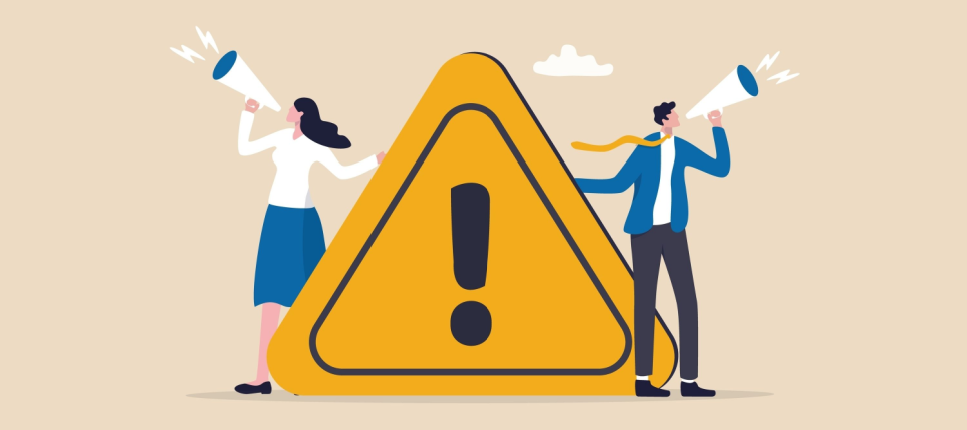
Every other thing is upon attention, namely learning, productivity, creativity, self-control. The things that capture your attention are what control your thoughts, choices and behaviors.
Previously, need directed attention to a large extent. Nowadays, it is actively attacked. Algorithms, notifications and endless streams of content are established to ensure that you are occupied as long as you can be.
This continuous urge breaks attention, conditions the mind to be ready to be stimulated. Prolonged attention is not comfortable even on important occasions.
The Attention Economy and Its Impact on the Mind
The world we live in is commonly referred to as the attention economy. Mediums perform well when they are able to attract and retain attention. The more time you have been attentive, the better it can be of you.
Such an atmosphere is encouraged to be fast, new and emotional. Serious thinking does not do well in this system of thinking.
As a result, the brain adapts. It turns faster to respond, yet less efficient in terms of maintaining focus. Neurological changes influence memory, problem solving as well as emotional regulation.
You are not missing your attention, you are being trained.
Common Patterns That Drain Attention Daily
Constant interruption is one of the major trends. Alerts, messages and notifications distract time and again. Every interruption causes brain to reset which is a drain to the mental energy.
Multitasking is the other trend. Task switching seems productive, whereas it is inefficient and less clarity. The brain suffers every time it changes the focus.
Another villain is the information overload. The mind is loaded with endless news, content and opinions, which proves difficult on what to give a priority.
Lastly, the emotional appeals like outrages, fear, comparison, etc. attract attention more and keep it more than the neutral information.
These trends do not simply make you distracted. They re-pattern the functioning of your attention
Why the Brain Struggles to Resist Distraction
The brain is programmed to observe the new and the danger. This helped in surviving, but in an online world it is a weakness.
Each new alert or content has the potential relevance. The brain will react without logic coming in.
This monotony moves with time, making it less tolerable. In case of stimulation falling, mind turns to find it in other areas without necessarily making a decision.
That is why it now needs to be focused as opposed to having an automatic occurrence.
The Cost of Fragmented Attention
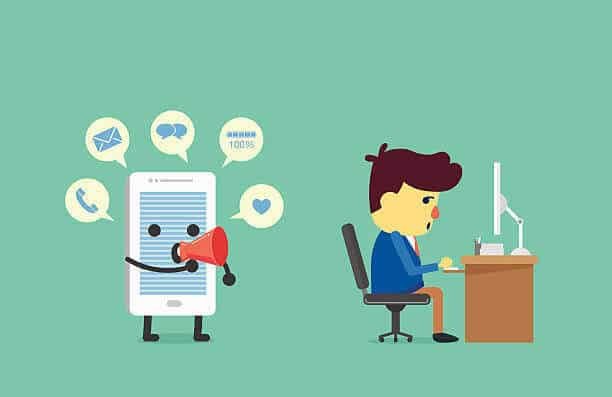
Divided attention does not only lower the productivity. It influences the way of thinking and feeling.
Deep learning is hampered by shallow focus. The mind is never passive and thus the emotional regulation is impaired. The process of decision making is hurried and lacks thinking.
With time, mental frustration ensues. You can be busy and dissatisfied, knowledgeable but confused.
The safeguarding of attention is not done more. It’s about thinking better.
How Attention Loss Affects Personal Growth
Reflection, consistency and self-awareness are the conditions of personal development. These call upon continuous thought.
Habits are more difficult to develop when one is not focused. Goals lose clarity. Expansion is painful and exasperating.
Most people feel that they are too undisciplined, but the problem is that attention cannot be managed.
Taking back focus is a way of getting the baseline to the enhancement of all spheres of life.
Practical Ways to Protect Your Attention
Reduce External Noise First
Environment is the first level on which focus protection commences. Undo unnecessary notifications. Design physical and virtual areas in which one can concentrate.
You do not require so drastic things–merely less interruption.
When the mind is encouraged through environment it is supported and followed.
Practice Single-Task Thinking
Concentrate on no more than one task at a time. Brain is re-trained even during short focused working.
By doing so, this practice will enhance control of attention and mental exhaustion.
It does not depend on the amount of time but the depth.
Schedule Time for Distraction
An attempt to make oneself totally un distracted usually backfires. Instead, contain it.
Set special hours to read messages or surf the internet. This minimizes automatic checking and regains control.
Boundaries do not cause resistance as they only protect attention.
Build Awareness of Attention Triggers
Take note of what you are mostly interested in. Is it boredom? Stress? Habit?
Consciousness undermines unconscious action. And when you observe the pattern you can break it.
Under slackened reactions, attention is enhanced.
Mindset Rewiring for Better Focus
It is not only external protection of attention. It’s mental.
Re-represent attention as an ability, but not a character trait. This lowers the factor of self-judgment and raises effort.
Change the thought of it being impossible to concentrate to I am training the focus. Language shapes behavior.
In addition, embrace the fact that focus is not comfortable in the beginning. Suffering is a strong indicator of expansion and not failure.
Why Rest and Mental Recovery Matter

A weary mind needs to be stimulated. Lack of sleep impairs the ability to control attention and makes one more impulsive.
Mental recovery also fulfills the function of helping to maintain the concentration because it restores clarity and equilibrium of emotions.
It does not mean that one has to engage in severe practices, one merely needs to take regular breaks, mediate and time to contemplate.
The mind is not always overloaded and this enhances concentration.
Common Mistakes to Avoid
Among the errors is the attempt to work by sheer will power. The environment is more instrumental than effort in terms of attention.
Another error is that there is the expectation of an immediate improvement. There is slow attentiveness which is enhanced by repetition.
Focus is also confused with many people taking to be busy. Unclear activities still occupy attention.
Finally, it is important not to become bored at all as doing otherwise means lack of focus. Mental strength is developed through learning how to sit at low stimulation.
How Long Does It Take to Rebuild Attention?
There is no fixed timeline. There are individuals who see the difference after a few weeks and years to scalablier changes.
Brain always readjusts according to regular patterns. Minor alterations made daily increase.
Initial advances when starting out are unobtrusive. The concentration gets sharper and then becomes intense.
It is more a question of consistency than intensity.
Why Protecting Attention Improves Everything Else
With enhanced attention, there will be clarity in thought. Decisions slow down. Emotional reactions soften.
The productivity is augmented without extra effort. Learning deepens. Individual development is speeded up.
Attention is not something to be controlled, it is to be free.
One of the strongest skills that you can develop is the skill of selecting what you will concentrate on.
Conclusion: Take Back Control of Your Most Valuable Resource
Never that you are weak, but the modern world of you is just made in such a way that your attention is at all times assaulted.
The positive side of it is that it is possible to protect and train attention. Small practices and awareness, boundaries, enable one to re-establish focus.
You do not have to flee technology and live an idyllic life. One simply has to be proactive.
Guard your concentration and you can guard your thoughts, development and direction.
Frequently Asked Questions (FAQ)
Why is my attention span getting worse?
Constant stimulation and interruptions train the brain to stay reactive.
Is distraction a personal weakness?
No, it’s a learned response to the environment.
Can attention be improved over time?
Yes, attention strengthens with consistent practice.
Does multitasking harm focus?
Yes, it reduces clarity and mental efficiency.
How long does it take to regain focus?
It varies, but consistency matters more than speed.
Do notifications really affect attention?
Yes, even silent alerts increase mental distraction.
Is boredom bad for attention?
No, tolerating boredom strengthens focus.
Can better focus improve personal growth?
Yes, focus is foundational to learning and habits.