


Introduction: Why Big Change Feels So Hard to Maintain
The majority desire effective individual development, but many of them get caught in loops of beginning robustly and becoming dull. You may have high ambitions, get encouraged briefly and gradually end up in your former ways. This trend is depressing and tends to create an impression that self-improvement would have to be a strip of the lash or dramatic changes in life in the end.
The problem isn’t effort. It’s strategy.
The 1 percent rule of personal development provides a more distinct alternative: one that is based on continuing little gains that squamishly accumulate over the years. As a practice of producing big breakthroughs, it is in fact a lesson in how such small everyday steps can be accumulated to create a prismatic shift, discourse about identity, and lasting change.
This principle is effective since it is similar to the way that the human brain changes.
What the 1% Rule Really Means

The concept that when one only has to improve by a percentage of one percent a day, it would grow greatly in the long run is known as the 1 percent rule. One percent does not seem important on the surface. It is psychologically strong, though.
The mind finds it easier to accept small ones. They do not provoke the opposition, the awe of fear, or oppression. That 1% rule is not about change, but change gradually.
Personal development is a performance, not an act.
With time, these small wins add up to create some progress which does not seem forced.
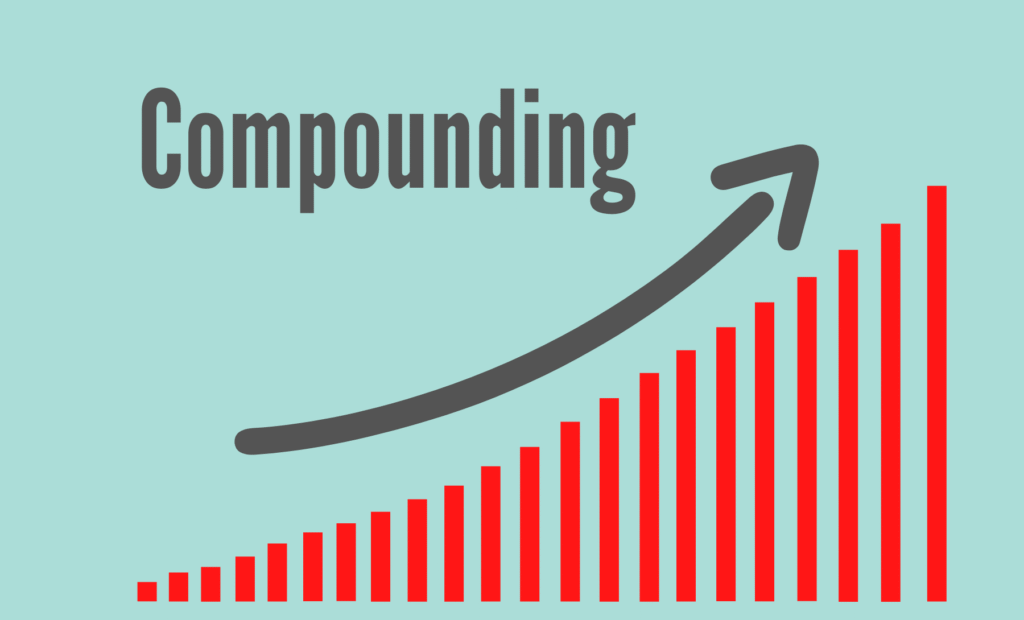
Why Small Improvements Compound
Compounding is not a financial concept only. It is generalized to habits, skills, attitude, and behavior.
Every minor accomplishment strengthens the feeling of confidence, competence and identity. The brain replaces the experience of your presence when you appear regularly even in minor terms. You start to consider yourself as a person who develops every day.
Such identity change facilitates easy growth in future.
The opposite is also true. Little bad habits are also accumulative. The 1% rule is efficient since it creates consciousness to the strength of direction, rather than speed.
The Psychology Behind the 1% Rule
Human brain does not like big and abrupt change. It favors predictability and security. Big goals can result in stress reactions, and hence in avoidance or burnout.
Minor steps are easy to make. They eliminate mental stress and avoid fear. They establish a feeling of trust between the intention and the behavior psychologically.
Once you complete your commitment, however little, you strengthen your faith in yourself. This assumption evolves into inspiration, hard work and toughness.
The 1percent rule is successful in that it does not go against human psychology but instead it works with it.
Common Growth Patterns That Hold People Back
One of such trends is all or nothing attitude. However progress can only be dramatic in the view of people. Where perfection cannot be had, industry ceases.
Impatience is yet another pattern. It is expected that growth will be experienced as rapid and tangible. When the outcomes are delicate, individuals would assume that nothing is going on.
Most of them also use motivation rather than systems. Motivation is not constant however small systems provide stability.
Finally, comparison perverts improvement. Comparing yourself to other people obscures the importance of a gradual change.
These trends cripple growth when it is not yet ready to compound.
How the 1% Rule Applies to Personal Growth

Personal development is not a single stage-it is some small stages running towards a single direction. Diligence, concentration, emotional control, emotional neatness, mental clarity, and self knowledge are all results of small daily steps.
Knowledge is accumulated by reading a number of pages per day. Min five minutes of reflecting make self-awareness better. Attention is acutely honed with one serious working session.
It appears that each action is small in itself. Their combined efforts produce long term change.
The 1 percent rule makes growth more of a way of life than a venture.
Practical Mindset Rewiring Techniques
Lower the Bar for Consistency
Rather than posing the question of what would impress, posing the question of what is sustainable would be better. Minor measures taken at all times are worth more than the hard measures taken only at times.
Reducing bar makes it less difficult to resist and more follow through.
Focus on Process, Not Outcomes
Learning is a process that is repeated in the brain but not the outcome. When you concentrate on presence, instead of success, you make progress that is gradual.
When the process is in check, there will be outcomes.
Reinforce Identity Through Action
Every little step is a hint of what you are turning into. Each healthy choice makes oneself stronger as a person who takes growth into consideration.
Consistency is being driven by identity change.
Track Direction, Not Perfection
Evolution is more of tendency than of exactness. Absentees just do not count back days. Returning to the habit does.
No guilt and more resilience are the results of this mentality.
Why the 1% Rule Feels Slow at First
Such early progress is usually invisible. The reason is that, growth occurs internally, prior to it being external.
Skills improve quietly. The confidence is built up in the background. Development of habits occurs as they are becoming habitual.
This time ailment demoralizes a great number of individuals. They stop right before they start to compound.
Knowing this step will make you stubborn enough to bring about some results.
Common Mistakes to Avoid
One equal error is to make the 1 percent rule an excuse to make the minimum effort unwittingly. Minor things still require perspective and attention.
The other pitfall is the use of change of strategies at all times. The process of compounding must involve repetition and not novelty.
Most individuals also assess progress too often. Daily results fluctuate. Long-term trends matter more.
Lastly, the process is negated by anticipating absolute motivation. It is discipline that develops out of consistency and not emotion.
How Long Does Compounding Growth Take?
There is no exact timeline. One of the benefits will be noticed after several weeks, whereas more fundamental changes will be noticed after months or years.
The thing is that it is necessary to remain consistent over a long period of time until the effects accumulate.
Compounding is insidious at the beginning and is observable in the middle and is evocative enough over time.
It is not about being fast, but being oriented.
Why the 1% Rule Builds Long-Term Confidence
Confidence grows from proof. Even every little victory will show you that you can rely on yourself.
This trust in self develops into discipline, clarity and strength. With time, you get to feel the pressure much less since the habits will be on your side.
The 1 percent rule has the confidence that is not based on an external validation.
Applying the 1% Rule to Everyday Life
The 1 percent rule may be applied to thinking, habits, relationships and the work.
One intelligent dialogue enhances communication abilities. A single concentration enhances productivity. A single reflection enhances self-knowledge.
These advances accumulate mute my mute.
Growing personally will be an experience, rather than a quest.
Conclusion: Small Steps, Lifelong Impact
Personal growth is not a shallow rule, yet it is simple; 1 percent. It honors the process of mind transformation and development of habit.
You do not have to have some dramatic transformations to develop. You require guidance, perseverance and constant.
There are tiny adjustments made each day that make a life look more committed to, oriented and strong in the long run.
Start small. Stay consistent. Let growth compound.
Frequently Asked Questions (FAQ)
What is the 1% rule for personal growth?
It’s the idea that small daily improvements compound into major long-term change.
Why do small changes work better than big ones?
They reduce resistance and support consistency.
How long does it take to see results from the 1% rule?
Results vary, but consistency matters more than speed.
Can the 1% rule apply to mindset change?
Yes, small mental habits compound over time.
Is the 1% rule about doing the bare minimum?
No, it’s about sustainable progress with intention.
What if I miss a day?
Return to the habit; consistency over time matters most.
Does motivation matter with the 1% rule?
Motivation helps start, but systems sustain progress.
Can anyone use the 1% rule?
Yes, it works for all levels of self-improvement.