


Introduction: Why Change Feels So Hard
Having lack of motivation is the reason why most people fail to achieve self-improvement. They fail since the habits they have are silently working against them on who they would wish to be. You may be aware of what you need to do, get up earlier, be more attentive, quit procrastinating, but you still soon find yourself back in the same ruts. It is not anger and disillusionment as a personal status. It’s psychology.
Behavior is not confined to habits. They are a manifestation of identity. Each repetitious behavior supports a notion of whom you are. Habits and identity that are not connected are exhausting when change happens. This is natural when the two are in line.
Knowing the psychology of forming a habit and personal identity can be useful in understanding why change seems so hard to last, and in making it ultimately permanent.
The Psychological Foundation of Habit Formation
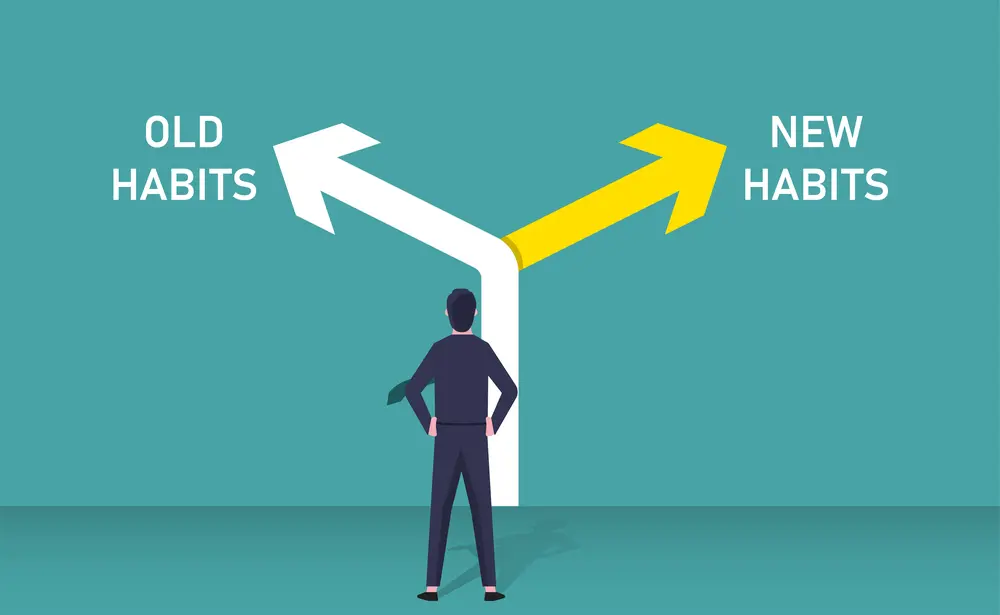
The development of the habit is initiated in the brain as a shortcut. The brain automates actions that occur in stable situations as opposed to making a conscious decision on every action. This saves on the mind power and cones decision weariness.
The process of habits has a basic loop through which they are triggered, responded, and finally rewarded (psychologically). This loop eventually is not more about the reward but familiarity. The brain begins to select what makes it familiar and not what makes it good.
This is the reason why bad habits will continue even in cases where the results are noticeable. The mind is much more appreciative of predictability than development. With what one is well accustomed to is the comfort of what may be safety than being exposed to the unknown.
Only logic does not make habits. They are conditioned by feeling, habit, place and beauty.
How Personal Identity Shapes Behavior
Personal identity is the narrative that you have as to who you are. These attitudes are mechanistic and they govern our day to day decisions without any conscious effort.
When an individual imagines that he or she is not a disciplined person, the brain will find ways to prove that person. Missing exercised sessions or delay is part of their identity thus it becomes normal.
Conversely, when the individual considers him or herself to be someone who is taking care of him or herself, healthy habits become more of a self-expression than a self-control.
Identity-based behaviour change makes it sustainable, as opposed to the outcome-based change. Goals focus on results. Identity is devoted to becoming.
The brain does not like to face those behaviors which threaten identity and encourage those which strengthen it.
The Link Between Habits and Identity Reinforcement
Any habit is a vote of the kind of person you think you are. One thing hardly makes identity and repetition does.
Change becomes less challenging when it is consistent with the identity since it is genuine. When this gets inactive, the brain is fricted and there is a tendency to revert to old patterns.
Such is the reason why sheer willpower is hardly effective. Willpower fights identity. Identity shapes willpower.
In order to make changes on a long term basis, the identity should be changed together with the behavior.
Common Psychological Patterns That Block Habit Change
All-or-nothing is one of the patterns. It is thought that, change should be dramatic in order to count. When it cannot be perfect it is work halted.
The other pattern is outcome obsession. Being able to see results aka. weight loss, productivity, success, etc. purely, without attaching behavior to meaning, is distracting. The absence of identity reinforcement causes the disappearance of habits as soon as motivation decreases.
The environment triggers would contribute as well. The brain links behaviors to some places, time, and emotions. Habits are automated without alteration of the surroundings.
Lastly, pessimistic self-talk silently supports the antique identities. It has psychological constraints such as thoughts such as this is just how I am which are hardly broken by habits.
Practical Mindset Rewiring Techniques
Shift From Goals to Identity
You should not ask, what do I want to achieve? ask, “Who do I want to become?” This minor change alters the manner in which the brain perceives actions.
One example can be having a goal of not writing every day, but simply being the person who writes. Every slight act by this point is evidence of identity, and no longer one of discipline.
Start With Small Identity-Consistent Actions
The brain embraces the change of identity at a slow pace. The minor gestures are natural and secure. The psychological trust is built with reading a single page, five minutes attention, or one healthy meal.
It is the consistency rather than the intensity as repetition transforms the self-perception.
Use Language That Reinforces Identity
The affairs about language matter psychologically. The statement that I do not go workouts makes identity stronger than the statement that I am attempting to work out.
The brain hearkens what is said to itself and changes behavior as a result.
Design Your Environment to Support Identity
Environments can be more important than motivation. Put in place the cues that stand to reinforce who you desire to be and eliminate cues that reinforce what you have been trying to do.
Equilibrium of identity in the environment allows habits to have minimal effort.
Common Mistakes to Avoid
Reliance on motivation is one of the greatest errors. The level of motivation changes, although the sense of identity remains. Being motivated makes habits collapse and fall under pressure.
The other error is making too many habits simultaneously. This fills the brain and undermines identity strengthening.
A lot of individuals give up prematurely as well. Initial stages of habits are clumsy as the identity is in the process of development. This should not be failure- it is getting used to it.
Finally, disregarding reflection subjugates growth. Habits are recreated unconsciously.
How Long Does Mental and Habit Change Take?
Habit formation does not have a particular timetable since it is a changing process depending on the individual and behavior of the person. Simple habits can seem to be natural in several weeks, and more profound identity changes can require months.
Consistency and not speed is what counts. It is not the intensity but repetition that leads to the brain rewiring itself.
The process of advancement seems unnoticeable at times. There is change of identity that is silent and then automatic behavior occurs.
The mental ability of patience is another important ability that should be used alongside discipline.
The Role of Self-Compassion in Habit Change

Self-compassion is likely to be confused with weakness. It also lowers the resistance psychologically and enhances learning.
The brain will remain active when disappointments are approached as an inquiry rather than condemnation. Embarrassment strengthens previous identities. Compassion enables new ones to be created.
Change of habits is not concerned with being perfect. It is all about being steady.
Conclusion: Becoming the Person Who Improves Naturally
The habit-forming and identity psychology is a strong reality that reveals the immense truth of long-term self-improvement that does not involve imposing change but becoming someone who the change makes sense to.
The habits are retained when they are reflected identity. It is the repeated intention that causes the development of identity. And this cycle is the way that real change occurs.
You cannot inquire why change is so difficult, you need to ask yourself who you are becoming with every little move. The finish line is not the goal of improvement. It’s a process of alignment.
Identity combined with habits helps you to cease to struggle in growth and begin to see growth as progress.
Frequently Asked Questions (FAQ)
What is the psychology of habit formation?
It explains how repeated behaviors become automatic through brain patterns and reinforcement.
How does personal identity affect habits?
Identity shapes which behaviors feel natural and which feel resistant.
Why do habits fail even with motivation?
Because motivation fades, but identity-based habits endure.
Can habits change personal identity?
Yes, repeated actions gradually reshape self-beliefs.
How long does habit formation take?
It varies, but consistency matters more than time.
What is an identity-based habit?
A habit that reinforces who you believe you are.
Why is willpower unreliable for habit change?
Because habits operate automatically, not through conscious effort.
Is small progress really effective?
Yes, small consistent actions build long-term identity change.