


Introduction:
In the modern 24/7 world attention seems vulnerable. You sit down to work and you are quite determined to be focused but a few minutes down the road you realize that your mind is wandering. You are not on a phone and you do not hear a notification go off but yet you lose focus. This annoys numerous users that really need to work more but do not need another application, subscription, or complex system.
The fact is very easy to understand and, yet, it can be easily distorted: focus is not a personality trait but a trainable mental skill. There is no need to empower it with digital tools. You must have proper exercises, which are regular, and done in a manner that observes the manner in which the brain actually functions.
It is a guide to breakdown what actually works as focus training exercise that do not need apps, gimmicks, and empty promises. All this is practical, easy to follow and aimed at assisting you to develop a real mental control with time.
Why Focus Is So Hard Today

The inability to pay attention is seldom associated with laziness or low intelligence. Most of the time it is the consequence of habitual mind patterns that take a toll on attention in the long term.
Constant context switching is one great cause. When your mind moves quickly between your tasks, then it gets to become used to novelty. Sustained attention is uncomfortable in the long run, whether nothing is wrong. Mental overload is also another cause. There are too many things to achieve, too many things to be put in and too many things to be left unfinished; they all claim that limited cognitive space.
Stress also plays a role. When the nervous system is marginally excited throughout the day then the brain dominates the scanning over the deep focus. This renders peaceful focus to be strange initially.
This is the main point: now your brain is used to being distracted, and the focus training is the activity of reversing the process that happened to it.
What Focus Training Really Means
Focus training has nothing to do with force and concentration or trying harder. Such a strategy usually backfires. When you are able to concentrate on a single object, task, or thought a little bit longer than it would naturally prefer, real focus training is the technique that will be used.
With this, you are increasing the neural circuits that deal with attention control with every such moment, whether it is a minor one. Over weeks, this compounds. Attention is more attitudinal rather than coerced.
The following exercises are effective as they are:
- Easy to recount on a daily basis.
- Films not too difficult, but cognitively demanding.
- Contrived not to distract internally only.
Focus Training Exercises That Actually Work
Single-Task Timing Practice
It is among the most powerful focus training practice since it is a direct opposite of multitasking practice.
Select one simple assignment: reading, writing, solving, or organization of notes. Define a time constraint, i.e. ten minutes. The only thing to do in the process is to remain with the task during that period of time. You mind must drift off, you do take it back without reproach.
It is also consistent rather than long, which is the strength of this exercise. Ten dedicated minutes each day work your brain much better than a once in a while long one.
Gradually add on more time. Instead of perfection, the same is being targeted with repetition to the task.
Thought Labeling for Mental Clarity

It is not noise that makes many people lose their focus, but rather it is internal dialogue. This is minimized by thought labelling.
Upon the coming up of an interrupting thought simply name it. Such an example is, planning, worrying, or remembering. Then get back to whatever you were doing.
This makes you have a slight psychological gap between yourself and the thought. You are not drawn into it any more. Through practice the thoughts can be detained less and concentration gets regained automatically.
This practice trains awareness: a basis of stay attentiveness.
Visual Anchoring Exercise
Focus is reinforced in the visual anchoring, which provides a very identifiable and stable target to the attentional function.
Select something in your surroundings that is not too complicated like a pen or an area on the wall. Gaze at it between one and two minutes. Description of the details of the noticed object: shape, color, texture. When you lose your track bring back your mind to the object.
Objectively, this can be a surprisingly challenging exercise. That hustle is an indication that it is effective. You are training the brain to stay with one stimulus and not to get something new.
Such ability later extends to work, reading and discussions
Mental Repetition for Attention Stability
Mental repetitions entail retaining one word, phrase or thought in your mind.
Siting at ease, repeat quietly a neutral word or short phrase. In case of loss of focus, just go back to the repetition.
This practice enhances longer attention and less mind-talking. It also develops an ability to be tolerant to stillness which most people have become without even knowing.
Even a few minutes a day can serve as a difference in the time you can spend on the tasks in the future.
Focused Listening Practice
This practice trains the concentration with the help of hearing, rather than sight.
Sit down with one sound which you concentrate on. It might be the sound of traffic, or a clock and so on. Simply do not analyze that sound but pay attention.
As you lose track of listening, come back.
The habit enhances selective attention, which is an important element of deep focus. It also is beneficial in relaxing nervous system after which it becomes easy to focus.
Mindset Shifts That Make Focus Training Effective
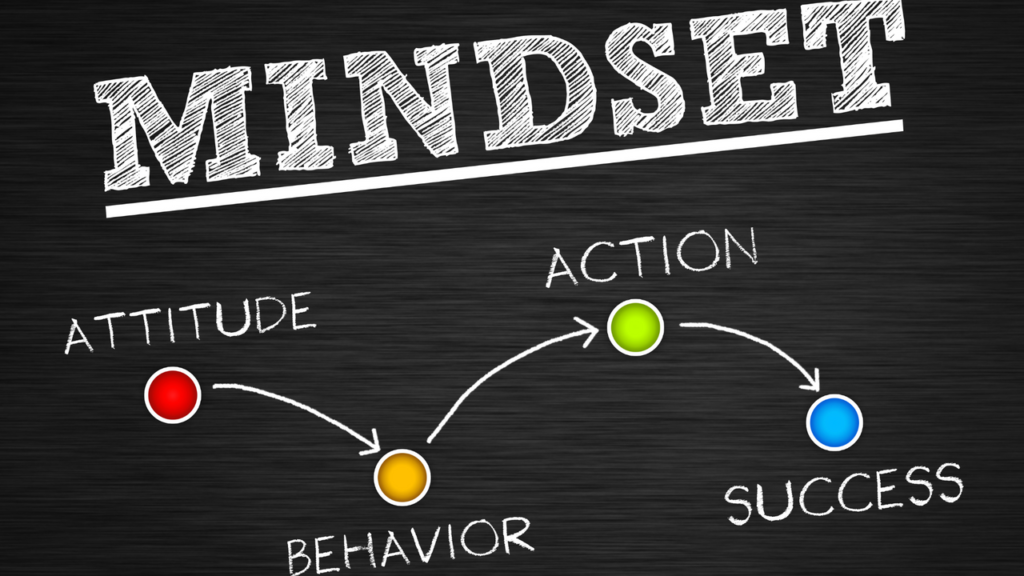
When individuals are anticipating instant outcomes, focus training is a failure. One becomes focused with repetition, not with intensity.
Among the assistive attitude changes is the realization that failure in keeping focus is a normal training process rather than a failure. Every time there is a repetition of the task it is a successful one.
The other change is abandoning the notion that focus should be easy in the beginning. Initially, it is usually awkward. Such unease dissipates as brain becomes accustomed.
Lastly, value focus training as a skill not as self-discipline. This eliminates stress and enhances sustainability.
Common Mistakes to Avoid
An example of sabotage to focus training is done by many individuals, and they are not aware of it.
The first error is training on inspiration. The attention is developed not by sensation but by habit. The other error is adding time at a rapid pace and creates resistance in the mind.
There are also those who want focus training to be carried out so that there is no distraction. It is an expectation that produces frustration. Zero distraction is not the actual purpose but faster recovery.
Do not use others to benchmark yourself. Attention capacit
How Long Does Focus Training Take to Work?
The majority of the population can observe slight improvements in one to two weeks. These can involve reduced psychological agitation or less difficulty in doing tasks.
Most apparent changes are realized after about four weeks or six weeks of regular practice. The concentration span is increased and the resumption of action becomes more convenient.
The long term patterns of changes in attention evolve with several months. This schedule shows the way that the brain rewires itself. The process includes the element of patience.
Why These Exercises Work Without Apps
Apps are not needed, but can prove useful. Focus training is best achieved when it is a part of the life rather than the second task that has to be handled.
These are exercises that do not need any external assistance. They work directly on attention by means of your consciousness. This renders them flexible, lightweight and durable.
When you take away tools, you create in-house competency. The skill remains with you no matter what the environment, no matter what is the technology.
Conclusion: Focus Is Built, Not Found
There is no quick way of learning to focus. You have to create it one moment at a time.
When these focus training exercises are performed on a regular basis, you are actually teaching your brain not to leave, to come back and create a level ground. You do not require applications, hacks, and drastic exercise programs. It requires patience and practising and being ready to train softly.
Start small. Stay consistent. With perseverance, the struggle to focus turns out to be a bit less hard and a little more of a natural condition that can be called upon when it is urgently required.
Frequently Asked Questions
What are focus training exercises?
They are simple mental practices that strengthen attention control through repetition.
How often should I practice focus training?
Daily practice, even for a few minutes, works best.
Can focus really improve without apps?
Yes, focus improves through awareness and repetition, not technology.
Why does my mind wander so much during training?
Mind wandering is normal and part of the training process.
How long before I see results?
Small changes often appear within two weeks of consistent practice.
Is focus training the same as meditation?
Some exercises overlap, but focus training is task-oriented and practical.
Can beginners do these exercises?
Yes, they are designed for beginners and intermediate learners.